









Tree Roots in Sewer Lines
Tree roots in sewer line systems are one of the most common underground plumbing concerns homeowners face, yet many people do not realize how it begins. Roots are naturally drawn toward moisture. Sewer lines carry warm, nutrient-rich water beneath your yard, making them an attractive target for root growth.
In Nebraska, where aging sewer infrastructure and shifting soil conditions are common, root intrusion can develop slowly over time. Understanding how roots enter underground sewer pipes, what warning signs appear first, and when professional evaluation is appropriate can help you respond early without jumping to worst-case conclusions.
How Tree Roots Get Into Sewer Lines
Roots do not break into solid pipe walls overnight. They typically enter through small cracks or pipe joints. Older clay sewer lines are especially vulnerable because their joints can separate slightly over time.
Moisture attraction plays a major role. Even a tiny leak creates condensation and vapor in surrounding soil. Root systems sense that moisture and grow toward it.
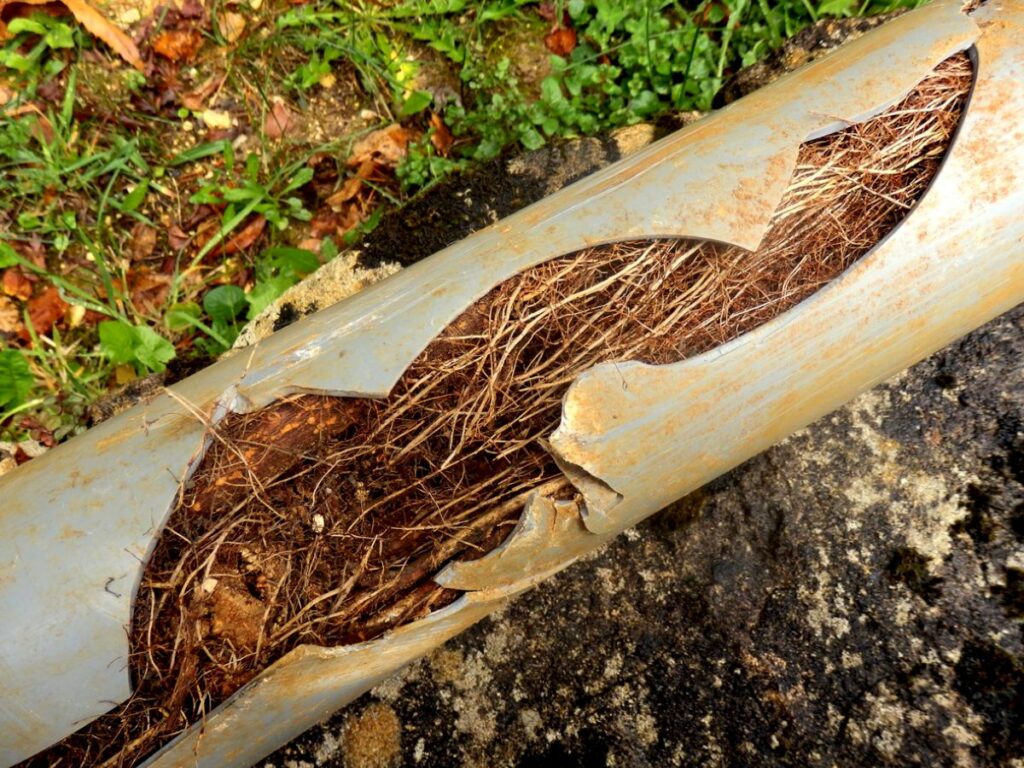
Once roots in sewer line openings find a gap, they continue expanding inside the pipe. As the root mass grows, it can begin to restrict flow. This process is gradual and often unnoticed until symptoms appear.
Common Signs of Tree Roots in Sewer Pipes
Early signs of tree roots in sewer pipes often resemble minor drain issues.
Homeowners may notice:
- Slow drains that gradually worsen
- Recurring clogs in the same fixture
- Gurgling sounds from toilets or drains
- Multiple plumbing fixtures affected at once
When slow drains appear throughout the house rather than in one isolated sink, it may suggest a deeper blockage in the main sewer line. These early symptoms often develop long before significant damage occurs.
Monitoring recurring patterns is important. Occasional clogs can happen for many reasons, but repeated issues may indicate sewer line root intrusion.
Why Tree Roots Cause Sewer Line Problems
Roots inside underground sewer pipes expand over time. As they grow, they create partial blockages that restrict wastewater flow.
This restriction can lead to:
- Backups in lower-level drains
- Increased pressure inside the pipe
- Joint separation
- Pipe cracking
Tree root sewer damage typically progresses slowly. What begins as fine root strands can become a dense mass. As water flow pushes against the obstruction, pressure builds and stresses pipe joints.
The concern is not immediate collapse. Instead, it is the gradual impact on flow and pipe stability. Left unaddressed, roots can widen existing cracks and allow more root growth.
Nebraska Soil and Sewer Line Vulnerability
Nebraska soil conditions contribute to movement around buried pipes. Freeze-thaw cycles, clay expansion, and natural settling can shift underground sewer pipes slightly.
These small shifts may create minor separations at pipe joints. In aging sewer infrastructure, even tiny gaps are enough for root growth to begin.
Homes built decades ago are more likely to have clay or older pipe materials. That does not guarantee problems, but it does increase vulnerability over time.
Understanding the relationship between soil movement and pipe joints helps explain why tree roots in sewer line systems are common in older neighborhoods.
When Root Intrusion Becomes a Plumbing Concern
Not every slow drain signals a serious problem. However, increasing frequency of clogs or odors may suggest that root growth is expanding.
You may want to monitor the situation more closely if:
- Clogs return shortly after clearing
- You notice persistent sewer odors
- Water backs up during heavy use
- Outdoor cleanouts show standing water
Recurring symptoms indicate that root intrusion may be affecting more than one fixture. This does not automatically mean replacement is necessary, but it does suggest evaluation may be helpful.
If backups occur suddenly or wastewater begins rising into lower-level drains, prompt action becomes important. In those situations, contacting Emergency plumbing services can help prevent further damage while the issue is being assessed.
How Professionals Evaluate Root Intrusion
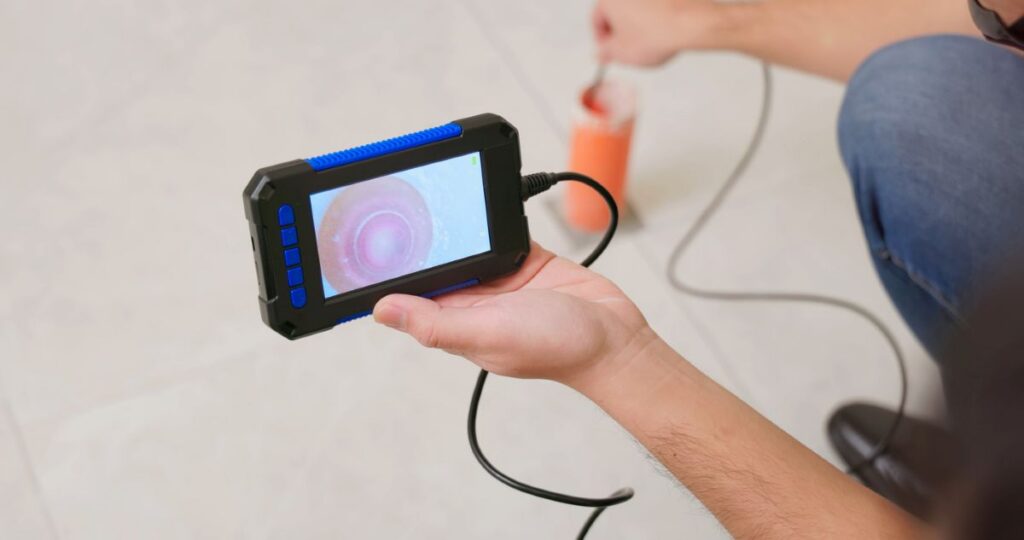
Professional evaluation typically involves camera inspection of the sewer line. A small camera is inserted through an access point and moved along the pipe.
A camera inspection can identify:
- Root growth location
- Extent of intrusion
- Pipe joint condition
- Cracks or separations
This process provides clarity without excavation. It helps determine whether preventative maintenance or monitoring is appropriate.
Evaluation focuses on understanding pipe condition rather than immediately recommending major work.
Preventative Awareness and Monitoring
Homeowners can reduce risk by paying attention to recurring drain behavior and scheduling periodic inspections in older homes.
Preventative maintenance strategies may include:
- Avoiding planting large trees directly above sewer lines
- Monitoring root growth patterns near plumbing routes
- Scheduling inspections if symptoms increase
The goal is awareness. Tree roots grow naturally. The key is identifying when their presence begins affecting residential plumbing systems.
When to Schedule a Sewer Line Evaluation
An evaluation simply gives you a clear picture of what’s happening inside the pipe. From there, you can decide what makes sense.
A professional review focuses on condition assessment, not urgency. It helps protect your plumbing system and provides guidance based on actual findings.
For homeowners who want additional information about sewer line services or inspection options, local plumbing professionals at Getzschman can provide further guidance.
Schedule Online